
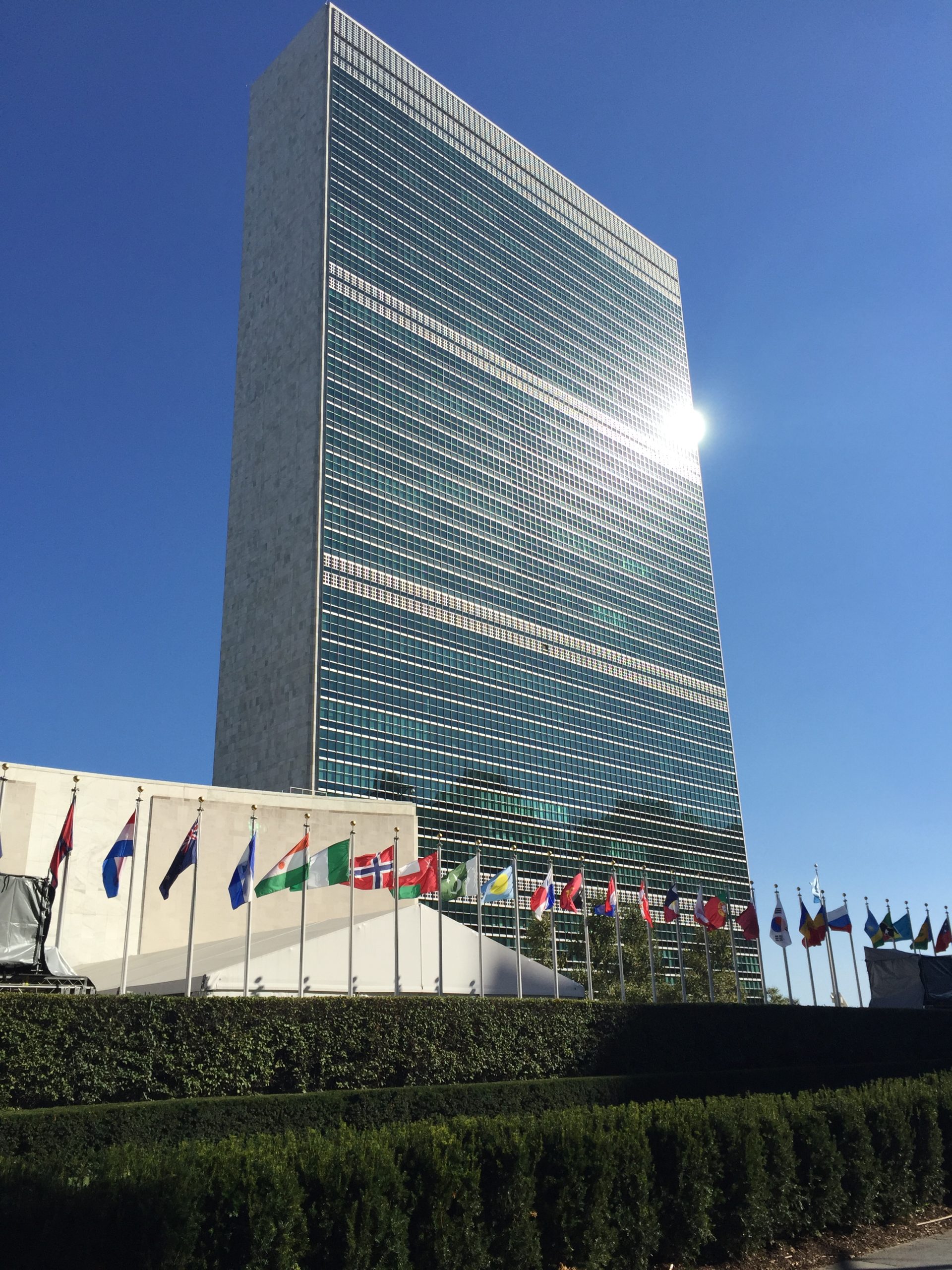
Let Us Beat Swords into Ploughshares is a sculpture showing a man reshaping a sword into a ploughshare, a powerful metaphor for turning away from war and toward peace. Donated by the USSR and unveiled on December 4, 1959, it stands before the UN headquarters in New York, symbolizing humanity’s collective desire to end conflict and build a peaceful world.
But the world we live in now is far removed from the post-World War II era, when the devastation of global conflict led to a shared commitment to create the United Nations — not as an idealistic dream, but as a real step toward preventing war and promoting peace.
The statue reflects that aspiration: transforming weapons of violence into instruments of growth and sustenance. It was a noble vision — but one that has since been challenged.
Before this international pursuit of peace took shape, imperial powers dominated the globe. Empires like the British, French, Dutch, Russian, Ottoman, and even American, claimed foreign lands under the guise of “civilisation”, often masking brutal conquest and exploitation. Africa was arbitrarily divided, Asia plundered, and the Americas reshaped by colonisation. The United States, rising in influence, asserted its dominance across the Western Hemisphere.
This was the era of “spheres of influence”, where power dictated terms, and weaker nations had little say. Justice was absent — replaced by might and manipulation.
When the balance of power collapsed, it triggered World War I — a catastrophic event that was supposed to end all wars. From the wreckage emerged a fragile hope: the League of Nations. Its mission was to prevent future wars by establishing peace as a binding principle. Yet it failed from the start — the US, though instrumental in its conception, refused to join. The League lacked enforcement power and failed to stop rising aggressors like Japan, Mussolini, and Hitler. Eventually, the world plunged back into war.
After the devastation of World War II — after cities were decimated and millions perished — the world declared, “never again.” In 1945, 51 nations, including major powers, established the United Nations. This new body aimed to prevent unilateral aggression, promote diplomacy, and uphold human rights, with an empowered Security Council authorized to act collectively — including militarily.
This time, the US took on a leadership role, hosting the UN headquarters and becoming one of five permanent Security Council members with veto power. The founding hope was that no nation would be above international law.
Yet, the Cold War soon tested that ideal. The US and USSR repeatedly clashed at the UN, using vetoes to block action and shield allies, while proxy wars erupted from Asia to the Middle East, often outside UN mandates. Still, the UN retained a vital, if imperfect, role in peacekeeping and international governance.
After the Soviet Union’s collapse, the US emerged as the lone superpower, steering UN-backed interventions in places like Kuwait, East Timor, and the Balkans. A new doctrine, “Responsibility to Protect” (R2P), signaled that the world could intervene to prevent atrocities. It seemed like multilateralism was gaining ground.
Then came September 11, 2001. The US responded with the “War on Terror”, starting in Afghanistan — an action broadly supported. But the 2003 invasion of Iraq, launched without UN authorization and based on false claims of weapons of mass destruction, marked a major shift. It showed that even the UN’s strongest proponent was willing to bypass it when convenient, reviving the old “might is right” mindset.
Recently, Pope Leo XIV lamented that international law is being sidelined by raw power. In his words, humanitarian and legal norms are no longer binding, replaced by the desire to dominate.
That reality is evident today: Russia’s invasion of Ukraine blatantly violates the UN Charter, yet Russia, like the US, holds a permanent seat — and veto — on the Security Council. Many nations, especially in the Global South, view this as hypocrisy: that international law is enforced only against the weak.
To restore global trust in a rules-based order, urgent reforms are needed. The Security Council must become more inclusive and less dominated by the P5. International courts must be empowered and respected. All countries, regardless of power, must be held accountable. Regional cooperation and diplomacy should be strengthened to prevent unilateralism.
Otherwise, we risk sliding back into an era where brute strength dictates outcomes, and the principles underpinning global peace collapse.
The UN was born to end cycles of war and imperialism. It has served — not perfectly, but with purpose — as a space for diplomacy and restraint. Yet, as powerful nations disregard its authority and reject global norms, the old order of domination is creeping back.
If this continues, the vision of a shared, peaceful world could disintegrate, replaced by instability, distrust, and endless conflict — a future where everyone, everywhere, suffers.