
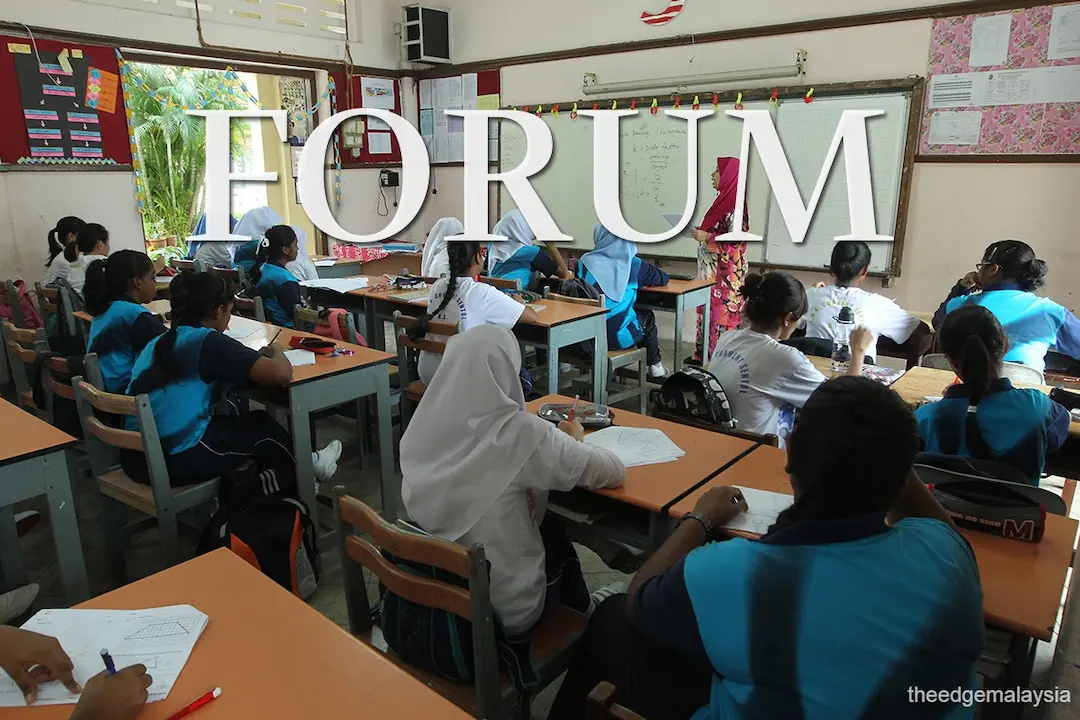
This article first appeared in Forum, The Edge Malaysia Weekly on November 17, 2025 – November 23, 2025
“Spare the rod and spoil the child.” — From the poem Hudibras by Samuel Butler (1835-1902), British novelist and poet
Once upon a time, schools in Malaysia were sanctuaries — places where children of all colours, creeds and callings gathered under the same morning bell, sang the same Negaraku and shared the same canteen bench.
Today, too many of those same classrooms echo with something darker — fear, division, violence and despair.
News headlines that once celebrated academic triumphs now mourn senseless loss. A race-fuelled brawl here, a bullying incident there, and — worst of all — the chilling reports of students killing or being killed.
What was once a space of innocence and growth has become a mirror reflecting the fractures of our society.
The loss of respect
It begins quietly — a snide racial remark, a shove in the corridor, a TikTok “challenge” mocking teachers or classmates. Then it grows.
The once respected guru besar is now insulted by students who no longer fear the consequences. The prefects, once symbols of order, are jeered as “teacher’s dogs”.
When respect dies, indiscipline rises — and with it, chaos. What we are seeing in some schools today is not just youthful mischief, but the hardening of a new subculture — one that glorifies rebellion, mocks decency and feeds on anger. They call themselves “cliques” and “gangs”, but they are really children crying for attention in a system that has lost its moral compass.
The poison of division
Race, once just a line on a form, has become a wall in our schools. Where once friendships were born out of shared food and laughter, now suspicion and prejudice creep in.
Children absorb what they hear at home, what they read online — and they bring those divisions to class.
What chance has a young mind to learn when it is already burdened with inherited hate? When our children begin to see race before they see humanity, we have failed them — not as teachers, but as a nation.
The murders that should never have been
Every time a young life is lost — in the dormitory, in the schoolyard, in the shadow of peer pressure — it should shake us to the core. These are not statistics. They are sons and daughters who will never graduate, never chase their dreams, never again smile at their parents.
Each tragedy is a verdict on our collective silence — a warning that discipline, empathy and care have eroded too far.
So, what can be done?
We can’t heal a system overnight, but we can start with courage and heart.
First, I believe we should bring back Moral and Civic Education — with soul, not slogans. Teach not just rules but reasons — compassion, forgiveness, humility and respect. Let every student learn to feel the pain of others before they inflict it. Teach them empathy and the value of collective responsibility.
Then, re-empower teachers and principals. Teachers must be able to discipline without fear of backlash. Principals must be moral leaders, not administrators buried under paperwork. Protect those who dare to uphold standards.
Third, unite students through shared service. The Japanese have shown the way. They even teach their young students to do daily classroom cleaning without waiting for janitors to do that.
Let our schools follow suit. Let schools adopt community days, where Malay, Chinese, Indian and indigenous students work together on social projects. Let them clean, build and serve side by side — for shared sweat heals where words fail.
Fourth, hire good teacher-counsellors for early intervention. Identify troubled students early — not to punish, but to guide. Every hardcore troublemaker began as a neglected child. Give them attention before they seek it through violence.
Bring parents more into the system. Make them accountable. Discipline begins at home. The Parent-Teacher Association is inadequate. The education ministry must engage parents as partners — not spectators.
We need community-based initiatives that rebuild the triangle of trust: teacher, student and parent.
Perhaps finally, restore the spirit of unity in education policy. Our schools must be melting pots again, where diversity is strength, not a fault line.
Unity cannot be taught through slogans. It must be lived every day in classrooms and corridors and on sports fields.
A plea for the future
If we continue down this path of indifference, we will raise a generation that fears nothing, respects nothing and loves no one. But if we act now — with empathy, firmness and moral clarity — we can still reclaim our schools from the edge.
Our children deserve better. They deserve to learn without fear, to laugh without prejudice and to grow into Malaysians who see one another not as rivals, but as brothers and sisters under the same flag.
Because a nation’s future is written not in its skyscrapers, but in its classrooms. And right now, our classrooms are crying for help.